

Over 81% of large buildings in New York City still rely on steam heat, a massive infrastructure that has been the city's backbone since 1882. While these historic systems are impressive, they often feel like a liability when pipes start banging or one room feels like a sauna while the next stays freezing. If you're managing a classic brownstone or a pre-war apartment, you've likely realized that a general plumber isn't enough; you need a dedicated steam heating specialist NYC who understands the delicate physics of low-pressure steam.
It's exhausting to deal with sky-high winter bills and water leaking from radiator vents. You deserve a heating system that's quiet and reliable, not one that causes constant stress. This article explains how specialized technical adjustments can silence water hammer, balance heat distribution, and lower your fuel consumption. We will also cover essential safety updates, including the latest requirements for Local Law 151 inspections, to ensure your building remains a comfortable and compliant place to live.
Key Takeaways
- Understand why NYC’s unique one-pipe and two-pipe steam systems require a technician trained in vapor-phase heat transfer rather than a general HVAC contractor.
- Learn the "Air is the Enemy" principle and how functional main vents are the secret to getting heat to the top floor quickly.
- Discover why loud water hammer and uneven temperatures are solvable mechanical imbalances rather than unavoidable quirks of an older building.
- Identify the critical role of near-boiler piping in producing dry steam, which prevents radiator leaks and lowers monthly fuel consumption.
- See how a steam heating specialist NYC provides the precise diagnostics and 24/7 emergency support needed to maintain historic brownstones and commercial properties.
What is a Steam Heating Specialist and Why Does NYC Need Them?
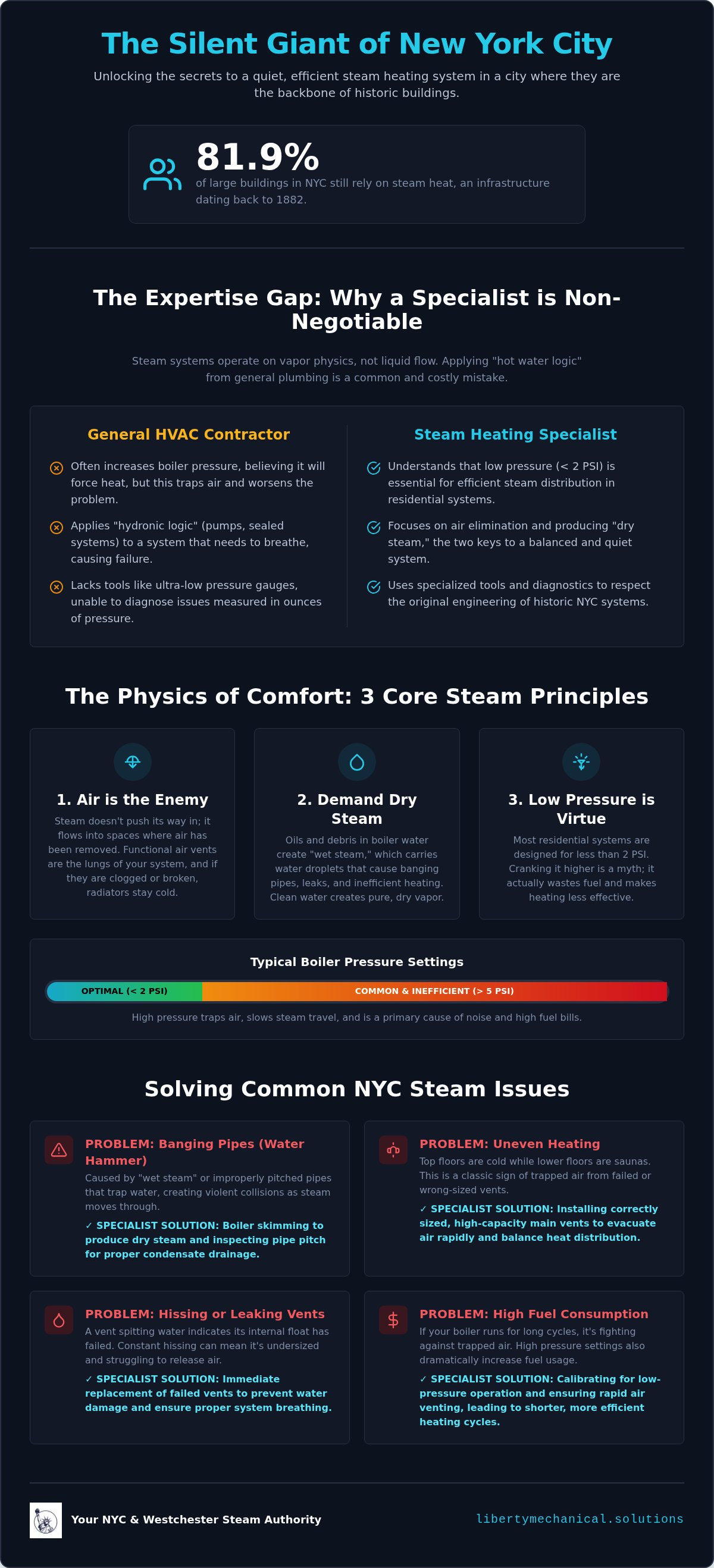
A steam heating specialist NYC is a technician specifically trained in the physics of vapor-phase heat transfer. Unlike general plumbers who focus on liquid flow, these experts manage how water turns into gas and travels through a building. This distinction is vital because steam systems operate on a delicate balance of pressure, air displacement, and gravity. In New York City, where 81.9% of large buildings rely on steam, the need for this niche expertise is high. Most systems in our area are decades old; they require a technician who respects the original engineering while applying modern diagnostic standards.
General HVAC contractors often struggle with NYC’s one-pipe and two-pipe systems because they apply "hot water logic" to vapor problems. They might try to solve a lack of heat by increasing the boiler's pressure, but this actually traps air and prevents steam from moving. A specialist uses precision tools like ultra-low pressure gauges that measure in ounces rather than pounds. They also utilize skimming equipment to remove oils and debris from the water's surface, ensuring the boiler produces "dry" steam that won't cause pipe damage or radiator leaks.
Steam vs. Hydronic: Knowing the Difference
The primary difference between these systems is the medium used to carry heat. Steam uses its own vapor pressure to move through pipes, while hydronic systems use pumps to circulate hot water. You cannot apply hydronic repair logic to a steam boiler; adding a pump or sealing a vent that is meant to breathe will cause the system to fail. To understand the complexity, it helps to look at How Steam Heating Works as a foundational form of central heating. In many Westchester renovations, we find hybrid systems where a steam boiler also feeds a secondary hot water loop for a new addition, requiring a dual-expertise approach to maintain balance.
The Legacy of NYC Brownstone Heating
Manhattan townhouses and historic brownstones face unique challenges due to their vertical steam risers. These pipes must carry steam up several stories while simultaneously allowing condensed water to drain back down the same path. Decades of "quick fixes" by non-specialists, such as installing the wrong size air vents or painting over radiator valves, have led to the uneven heat many residents experience today. Professional maintenance isn't just about comfort; it preserves the value of these historic properties. By ensuring the system operates at the low pressures it was designed for, we prevent the structural stress that leads to costly pipe failures and leaks.
The Physics of Comfort: How Steam Systems Actually Work
Steam heating is a study in pressure and air displacement. Many homeowners believe the boiler pushes steam into the radiators, but the reality is simpler: steam flows into areas where the air has been removed. This is the "Air is the Enemy" principle. If air cannot escape the pipes, steam cannot enter, leaving you with cold rooms despite a firing boiler. Understanding the scale and history of the systems Liberty Mechanical Solutions services helps illustrate why these systems require such specific balancing to function correctly.
Efficiency also depends on the production of "dry steam." When boiler water is dirty or has a high concentration of oils, it begins to foam. This foam carries liquid water into the pipes, creating "wet steam" that cools down quickly and causes loud clangs. A steam heating specialist NYC ensures the water chemistry is balanced so only pure vapor leaves the boiler. Gravity then does the rest of the work, pulling condensed water back down the pitched pipes to be reheated. If your system is struggling to reach the top floor, a professional steam system evaluation can identify where these physical laws are being obstructed.
Air Vents: The Lungs of Your System
Think of air vents as the lungs of your building. Radiator vents handle the air in individual rooms, but main vents located in the basement or at the ends of long pipe runs do the heavy lifting. If these main vents fail, the steam must push air through tiny radiator vents, which takes significantly longer. A Gorton vent is a specialized high-capacity valve designed to evacuate large volumes of air quickly so steam can reach the furthest radiators in minutes. If you see a vent "spitting" water or hear constant hissing, the internal float is likely failed and requires immediate replacement to prevent water damage.
The Importance of Low Pressure
One of the biggest myths in NYC heating is that higher pressure equals more heat. In reality, most residential steam systems were designed to operate on less than 2 pounds per square inch (psi). Many boilers are incorrectly set to 5 psi or higher, which actually prevents the air vents from closing properly and creates "water hammer." This occurs when high-pressure steam slams into pockets of trapped water, creating sounds like a sledgehammer hitting the pipes. A specialist’s goal is to heat the entire building on just a few ounces of pressure. This approach silences the system and significantly reduces monthly fuel consumption.
Common NYC Steam Issues: Banging, Hissing, and Cold Radiators
Living in a pre-war building often feels like a compromise between historic charm and mechanical chaos. Many residents accept uneven temperatures as an unavoidable part of city life, but these symptoms actually point to specific mechanical failures. When the first floor feels like a sauna while the top floor remains freezing, the system is out of balance. This isn't just a comfort issue; it’s an efficiency disaster. Short cycling, where the boiler turns on and off every few minutes, is another red flag. It indicates that the system is reaching its pressure limit too quickly, often because of a blockage or an oversized unit. A steam heating specialist NYC looks beyond the boiler to find these systemic imbalances.
Diagnosing the Infamous "Banging Pipes"
The sounds of a sledgehammer hitting your pipes, known as water hammer, are usually caused by "wet steam." This happens when liquid water is carried out of the boiler and into the pipes, where it eventually slams into a pocket of condensate. Improper boiler piping is the most common culprit. If the "header"-the large pipe directly above the boiler-is too small or installed at the wrong height, it can't effectively separate water from steam. Additionally, radiator pitch plays a vital role. If a radiator isn't slightly tilted toward the supply valve, water pools inside the unit. This creates a trap that blocks steam and causes loud, violent banging every time the heat kicks on.
The Problem with Oversized Boilers
In the world of steam, bigger is rarely better. Many general contractors install boilers that are far too large for the building, thinking they are providing a "safety margin." This is a mistake. A steam boiler must be sized exactly to the total surface area of the radiators it serves, not the square footage of the rooms. When a boiler is oversized, it produces more steam than the radiators can condense. This leads to:
- Massive energy waste and sky-high fuel bills.
- Rapid pressure spikes that trigger the safety limit switch.
- Premature wear on the heat exchanger and burner components.
The Steam Specialist’s Evaluation Process
Evaluating a steam system is a methodical process that goes far beyond checking the boiler's flame. A steam heating specialist NYC analyzes the entire building as a single mechanical circuit. This starts with a detailed inspection of the near-boiler piping. The header and risers must be sized correctly to separate liquid water from the steam. If these pipes are too small or installed at the wrong height, the boiler will throw "wet steam" into the mains, leading to the banging and efficiency losses mentioned earlier. We then move to the main vent audit. These vents are usually located at the ends of the basement mains; if they are clogged or undersized, air remains trapped, and the steam can't move forward.
The evaluation continues with these critical steps:
- Radiator Audit: We check every radiator valve and vent to ensure individual room control. A stuck valve or a painted-over vent can disrupt the balance of the entire floor.
- Water Quality Analysis: We examine the boiler water for clarity and pH levels. If the water is surging or foaming, we perform a thorough skimming process to remove manufacturing oils and sediment.
- Combustion Analysis: We use digital analyzers to measure burner efficiency. This ensures you are getting the most heat for your fuel dollar while verifying that the system isn't producing dangerous carbon monoxide.
What to Look for in a Professional Evaluation
A true specialist spends as much time in your living spaces as they do in the basement. They will check the pitch of your radiators and verify that the air vents are sized correctly for each room's distance from the boiler. Pay close attention to the controls they inspect. A generalist often relies on a standard pressuretrol, but a steam heating specialist NYC will look for a vaporstat. This is a precision instrument that allows the system to run on ounces of pressure rather than pounds. You should always receive a written report detailing the specific pipe pitch corrections and vent upgrades required to restore balance.
Annual Maintenance: Preventing Winter Emergencies
Routine care is the best way to avoid a midnight outage during a cold snap. Skimming is a non-negotiable step for any new boiler installation. This process can take several hours as we slowly drain the top layer of water to remove factory oils that prevent proper steaming. We also test the low-water cutoff and the pressure relief valves to ensure the system is safe. If you find yourself without heat, you can rely on our team for Emergency Boiler Repair NYC. Investing in a professional steam system maintenance plan ensures these historic systems remain a reliable source of comfort for years to come.
Liberty Mechanical Solutions: NYC and Westchester’s Steam Authority
Liberty Mechanical Solutions serves as a steady hand for property owners dealing with the complexities of older heating systems. We understand that a boiler failure in January is more than a technical issue; it's a major disruption to your safety and comfort. As a dedicated steam heating specialist NYC, we provide 24/7 emergency support to ensure no resident is left in the cold during the height of the heating season. Our approach is built on transparent, solution-oriented diagnostics. We don't use high-pressure sales tactics. Instead, we explain the physical reality of your system's needs and provide a clear, professional path to restoration.
Our expertise extends across a wide range of mechanical needs, including:
- Boiler Repair and Maintenance for residential and commercial systems.
- Steam and Hydronic Heating System Service to ensure balanced heat distribution.
- Gas and Oil Burner Services for peak combustion efficiency.
- Building Automation Systems to provide modern control over historic infrastructure.
Serving the East Village to Westchester
Our technicians possess deep local knowledge of Manhattan’s unique building stock, from the historic vertical risers in East Village townhouses to the diverse residential boilers found throughout Westchester. We navigate the specific plumbing and heating codes required for compliant and safe operation in the city. This localized expertise allows for rapid response times when a Westchester residential boiler fails or a Manhattan brownstone experiences a massive water hammer event. We've built a reputation for "straight-shooting" advice and meticulous craftsmanship. If a system can be saved through venting and pipe pitch corrections rather than a full replacement, that is exactly what we will recommend.
Ready for a Quiet, Efficient Winter?
Don't wait for the first freeze to discover your system is imbalanced or noisy. Booking a steam system evaluation in the autumn allows us to address air blockages and water quality issues before the outdoor temperature drops below 55°F. There is a specific peace of mind that comes with a professionally balanced system. You gain the confidence that your radiators will provide even heat without the banging pipes or sweltering rooms that define many NYC winters. Our comprehensive services ensure your historic building remains efficient, safe, and comfortable all year round.
Schedule your steam heating consultation with Liberty Mechanical Solutions to ensure your system is ready for the months ahead.
Restoring Efficiency to Your Historic Property
NYC's historic steam systems are sophisticated feats of engineering that deserve more than generic repairs. We've explored how proper air venting and precise water chemistry are the real keys to silencing noisy pipes and balancing heat across every floor. When you move away from high-pressure settings and focus on the physics of vapor-phase transfer, your building becomes significantly more efficient and comfortable.
Working with a dedicated steam heating specialist NYC ensures that your system receives the specific diagnostics it needs, from near-boiler piping corrections to radiator pitch adjustments. Liberty Mechanical Solutions brings calm competence to every project, whether we're performing a routine evaluation or responding to an urgent winter outage. Our team values transparency and straightforward communication above all else.
With our 24/7 emergency service available and deep expertise in historic NYC brownstones, we provide the expert boiler repair and maintenance required to keep your building running smoothly. You don't have to settle for sweltering rooms or sky-high fuel bills this winter. Reliable comfort is just a professional consultation away.
Contact NYC’s Steam Heating Specialists Today to restore the quiet, even warmth your home was designed to provide.
Frequently Asked Questions
Why is my steam radiator making a loud banging noise?
Loud banging, often called water hammer, occurs when fast-moving steam slams into pools of condensed water trapped in the pipes. This usually happens if your radiator isn't pitched correctly toward the supply valve or if the boiler is throwing liquid water into the mains. A steam heating specialist NYC can adjust the pipe slope or clean the boiler water to eliminate these violent sounds and prevent long-term pipe damage.
How often should a steam boiler be serviced in NYC?
You should have your steam boiler professionally serviced at least once a year, ideally before the NYC heating season begins on October 1. Annual maintenance includes cleaning the burner, testing the low-water cutoff, and checking the pressure settings. Regular service prevents mid-winter failures and ensures your system complies with local safety regulations, including the biennial radiator inspections required for many residential buildings starting in 2026.
Is it normal for a steam radiator to hiss or leak water?
Constant hissing or water leakage is not a normal part of steam heat operation. Hissing indicates that an air vent is failing to close when steam arrives, which wastes energy and prevents the room from heating properly. Water leaking from the vent usually means the internal float is stuck or the radiator is flooded. These issues require immediate professional attention to avoid damaging your floors and wasting expensive fuel.
Why are some radiators in my building hot while others stay cold?
Uneven heat is almost always caused by poor air venting within the system. If air cannot escape the pipes and radiators quickly, steam cannot enter to provide heat. This often leaves radiators furthest from the boiler cold while those nearby are sweltering. Replacing clogged main vents and radiator valves allows the system to balance itself, ensuring every room reaches the desired temperature at the same time.
Can I replace my steam heat with a modern HVAC system?
It's possible to replace steam with modern systems like electric heat pumps, but it involves significant structural work and expense in historic buildings. Many NYC owners are exploring these options to comply with Local Law 97 carbon limits. However, a well-maintained steam system can still be highly efficient. We often recommend modernizing your existing steam controls and insulation as a cost-effective alternative to a full system conversion.
How do I know if my steam boiler is oversized for my building?
An oversized boiler often "short cycles," meaning it turns on and off every few minutes without fully heating the building. This happens because the boiler produces more steam than the radiators can condense, causing pressure to build too quickly. If your heating bills are unexpectedly high and the boiler runs in short, frequent bursts, it's likely not matched correctly to your building's total radiator surface area.
What is boiler skimming and why is it necessary for steam heat?
Boiler skimming is the process of removing oils, grease, and sediment that float on the surface of the boiler water. These impurities cause the water to foam and surge, which prevents the production of "dry steam" and leads to liquid water being carried into the pipes. A steam heating specialist NYC performs skimming to ensure the system runs quietly and efficiently while protecting the boiler's internal components.
Do you provide 24/7 emergency steam boiler repair in Westchester?
Yes, we provide 24/7 emergency boiler repair and maintenance across both NYC and Westchester. We understand that a heating failure during a cold snap is a serious emergency that requires an immediate response. Our technicians are ready to dispatch at any hour to troubleshoot boiler outages, restore heat, and ensure your building's mechanical systems are safe and functional throughout the winter months.
